4-Year-Old Preschool Learning: 8 Amazing Milestones to Know
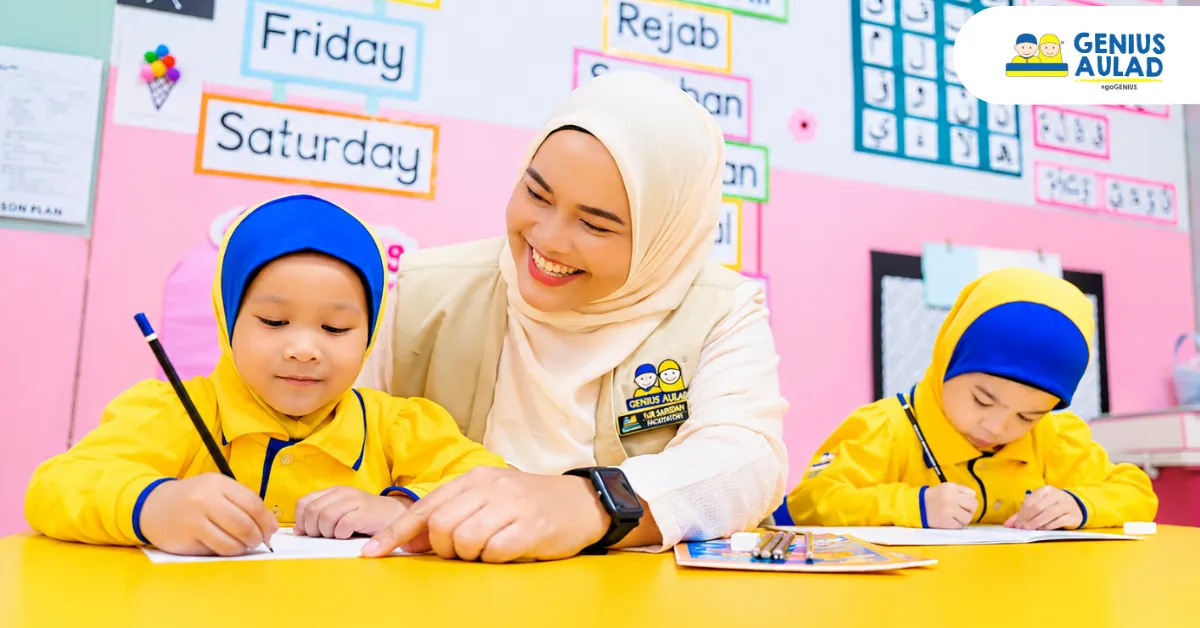
4-year-old preschool learning is an exciting stage in a child’s early development. At four years old, children are naturally curious, energetic and eager to explore the world around them. They begin developing important skills that prepare them for future learning, social interactions and everyday experiences.
For many Malaysian parents, one common question is: What should a 4-year-old learn in preschool?
The answer goes beyond recognising letters, counting numbers or writing simple words. A meaningful preschool experience should support children’s language development, emotional well-being, social confidence, creativity, independence and positive character. At Genius Aulad, we believe every child deserves a balanced learning experience that nurtures their intellectual, emotional, physical and spiritual development.
In this guide, we explore eight essential skills that support 4-year-old preschool learning and explain how parents can encourage these abilities both at school and at home.
1. Language and Communication Skills
Language development is one of the most important foundations of 4-year-old preschool learning.
At this age, children are developing their ability to express thoughts, ask questions, understand instructions and communicate with others. A supportive preschool environment encourages children to develop communication skills through storytelling, conversations, songs and interactive activities.
What Should a 4-Year-Old Learn?
Children can be encouraged to:
● Recognise familiar letters and sounds.
● Understand and follow simple instructions.
● Speak in increasingly complete sentences.
● Listen to stories and answer basic questions.
● Express their feelings, ideas and needs.
● Develop vocabulary through everyday conversations.
Fun Language Activities for Preschoolers
Teachers can introduce picture cards, storytelling sessions, phonics games, nursery rhymes and role-playing activities. In an Islamic-English preschool environment, children can also become familiar with English vocabulary, greetings and age-appropriate Islamic expressions.
Why is it important?
Strong communication skills help children build confidence, express their needs, form friendships and develop early literacy foundations.
2. Early Mathematics and Number Recognition
Mathematics is another essential component of 4-year-old preschool learning.
At four years old, children should be introduced to basic mathematical concepts through enjoyable and practical activities rather than complicated calculations. Learning through play allows children to understand numbers, shapes, sizes and patterns naturally.
What Mathematics Skills Can Children Develop?
Preschool activities can introduce:
● Number recognition from 1 to 10 and gradually beyond.
● Counting objects using toys and learning materials.
● Identifying circles, squares, triangles and rectangles.
● Recognising colours and simple patterns.
● Comparing big and small objects.
● Understanding basic concepts such as more and less.
● Sorting objects according to colour, shape or size.
Fun Mathematics Activities
Counting colourful blocks, sorting toys, matching number cards and identifying shapes around the classroom make early mathematics engaging. Teachers can also use songs, movement and everyday classroom objects to introduce basic mathematical concepts.
Why is it important?
Early mathematics supports logical thinking, observation, concentration and problem-solving abilities.
3. Social Skills and Friendship Building
Social development plays an important role in 4-year-old preschool learning because children are beginning to build relationships outside their immediate family. Preschool provides opportunities for children to interact with classmates, participate in group activities and understand the importance of cooperation.
Essential Social Skills for 4-Year-Olds
Children can practise:
● Sharing toys and learning materials.
● Taking turns during games.
● Making friends and participating in group activities.
● Using polite expressions such as “please” and “thank you”.
● Respecting classroom rules.
● Helping friends and teachers.
● Understanding the importance of kindness.
Activities That Encourage Social Development
Group storytelling, cooperative games, pretend play and collaborative art projects help children practise positive social interactions. For example, building a tower together encourages children to communicate, share responsibilities and solve problems as a team.
Why is it important?
Developing social skills helps children build friendships, strengthen communication and become more comfortable in group learning environments.
4. Emotional Development and Self-Confidence
Emotional development is an essential part of 4-year-old preschool learning.
At this age, children are learning to understand their feelings and manage different emotions, including happiness, sadness, frustration and excitement. A nurturing preschool environment provides opportunities for children to express themselves safely and develop confidence.
Emotional Skills Children Can Develop
Preschoolers can learn to:
● Recognise basic emotions.
● Express feelings using appropriate words.
● Ask adults for help when needed.
● Practise patience and self-control.
● Develop confidence when trying new activities.
● Understand that making mistakes is part of learning.
Activities That Support Emotional Growth
Teachers can introduce emotion cards, puppet storytelling, role-playing and guided classroom conversations. Simple activities such as identifying facial expressions or discussing how storybook characters feel help children understand emotions.
Why is it important
Emotional development supports confidence, resilience, empathy and healthy relationships.
Parents can also explore our article on anti-bullying tips for Malaysian parents to learn how kindness and empathy can be nurtured from an early age.
5. Fine Motor and Gross Motor Development
Physical development is another important aspect of 4-year-old preschool learning.
Children need opportunities to strengthen their muscles, improve coordination and develop control over their body movements. These skills are divided into fine motor and gross motor development.
Fine Motor Skills
Fine motor skills involve smaller muscle movements, particularly in the hands and fingers.
Activities include:
● Holding crayons and pencils.
● Drawing simple shapes.
● Using child-safe scissors with supervision.
● Building structures using blocks.
● Completing age-appropriate puzzles.
● Playing with clay or playdough.
Gross Motor Skills
Gross motor skills involve larger body movements.
Activities include:
● Running and jumping.
● Balancing on one foot.
● Climbing age-appropriate playground equipment.
● Throwing and catching balls.
● Dancing and moving to music.
Why is it important
Physical development supports coordination, balance, confidence and independence. A balanced preschool programme should provide opportunities for both active outdoor play and indoor learning activities.
6. Creativity, Imagination and Problem-Solving
Creativity is a valuable part of 4-year-old preschool learning because it encourages children to explore ideas, experiment with materials and express themselves.
Four-year-olds often enjoy imaginative play, drawing, storytelling and discovering how things work. Rather than focusing on perfect results, preschool activities should encourage exploration and creativity.
Creative Skills Children Can Develop
Children can be encouraged to:
● Express ideas through drawing and painting.
● Create imaginative stories.
● Participate in pretend-play activities.
● Explore music, rhythm and movement.
● Build structures using different materials.
● Solve simple problems independently.
Fun Creative Learning Activities
Art and craft projects, building blocks, sensory play, music sessions and role-playing activities provide opportunities for children to develop their imagination. For example, a pretend grocery store can introduce communication, counting, cooperation and problem-solving through a single activity.
Why is it important
Creative learning encourages curiosity, independent thinking, confidence and flexible problem-solving.
7. Islamic Values and Positive Character Development
At Genius Aulad, 4-year-old preschool learning also includes opportunities to develop Islamic values and positive character. For Muslim families, introducing Islamic practices and good manners during early childhood can help children understand the importance of kindness, gratitude and respect.
These values can be introduced through simple, meaningful and age-appropriate learning experiences.
Islamic Values Children Can Learn
Children can begin practising:
● Islamic greetings such as Assalamualaikum.
● Simple daily duas.
● Kindness and honesty.
● Respect towards parents, teachers and friends.
● Gratitude for Allah’s blessings.
● Good manners during meals and daily activities.
● Caring for others and the environment.
Fun Islamic Learning Activities
Islamic storytelling, simple dua recitations, songs, role-playing and classroom routines can help children connect positive values with everyday life. For example, children may practise saying Bismillah before eating and Alhamdulillah after finishing their meals.
Why is it important
Introducing Islamic values during early childhood supports positive character development, empathy and respect for others.
Read more about why Islamic values matter in early childhood education.
8. Independence and Everyday Life Skills
Independence is an important goal of 4-year-old preschool learning. At four years old, children are gradually becoming more capable of completing simple tasks with less assistance. Preschool provides opportunities for children to practise responsibility, self-care and everyday routines.
Essential Independence Skills
Children can learn to:
● Put away toys after playing.
● Wash their hands before eating.
● Manage personal belongings with guidance.
● Eat independently using appropriate utensils.
● Follow simple classroom routines.
● Ask for help when necessary.
● Practise putting on shoes and managing clothing.
Activities That Encourage Independence
Daily classroom routines, snack time, role-playing and simple classroom responsibilities allow children to practise independence in a supportive environment. Teachers can encourage children to complete age-appropriate tasks while providing assistance when needed.
Why is it important
Independence helps children develop confidence, responsibility and a sense of achievement. These experiences also support a smoother transition into the next stage of preschool education.
Begin Your Chid's Learning Journey with Genius Aulad
Looking for an Islamic-English preschool that nurtures your child’s learning, creativity, confidence, and character development?
Discover the Genius Aulad learning experience for children aged 3 to 6 years old.
Enroll your little genius with us today
Explore our preschool programmes and find a Genius Aulad centre near you.